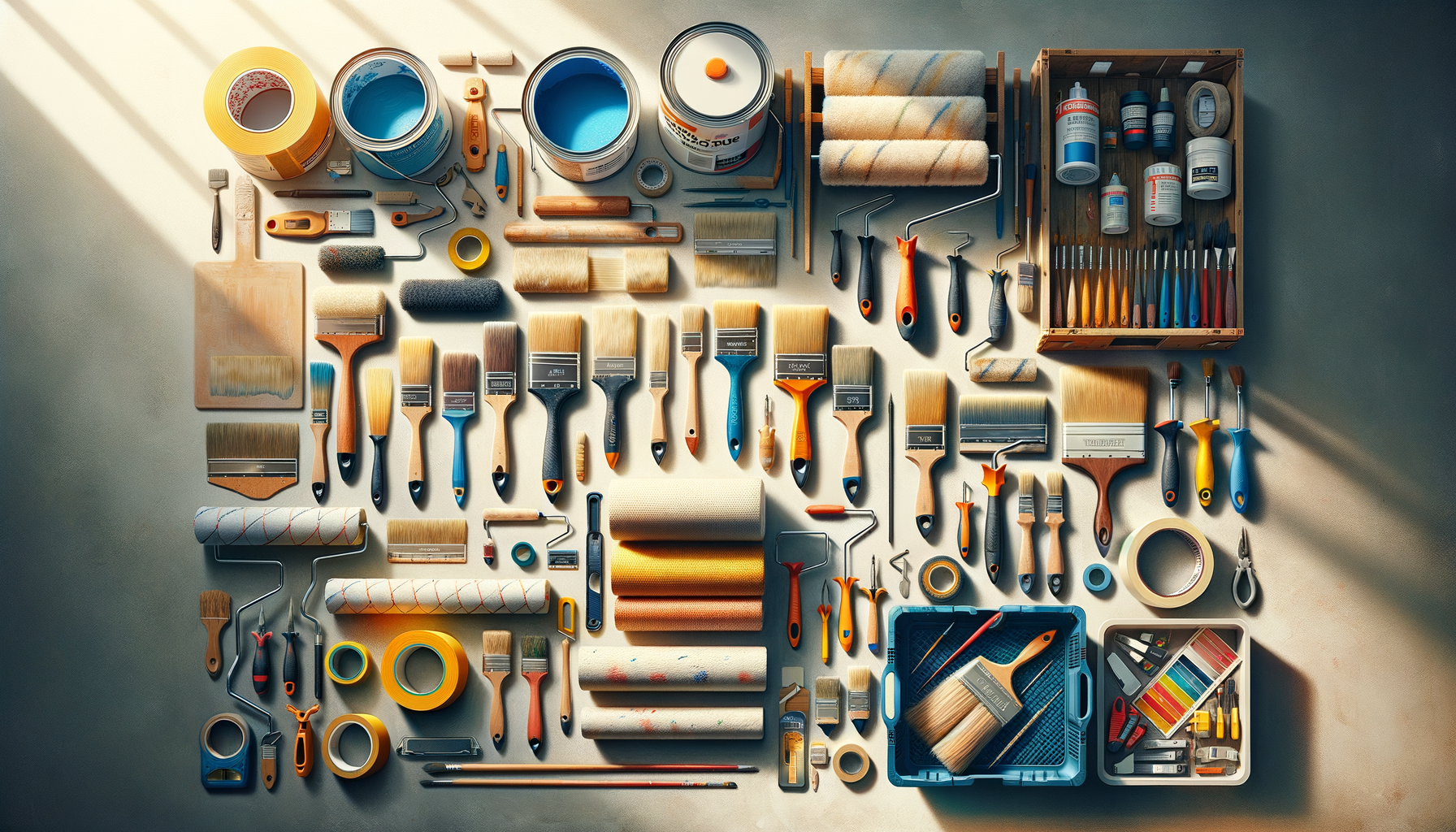
Painting tools and surface prep repair guide
AI-generated image

Painting Tools and Surface Prep

Select appropriate tools based on surface type and paint

Tools, Equipment, and Materials
Intermediate
240 minutes
2/2/2026

Affiliate Links: Some product links may earn us a commission at no extra cost to you.

Tools Needed

  • paint rollers
  • extension poles
  • paint brushes
  • roller trays
  • edging tool
  • scrapers
  • sanding blocks
  • putty knife
  • caulk gun

Parts & Materials

Available from multiple retailers

AmazonUnavailable
Home DepotMore buying options coming soon
Lowe'sMore buying options coming soon

Available from multiple retailers

AmazonUnavailable
Home DepotMore buying options coming soon
Lowe'sMore buying options coming soon

Available from multiple retailers

AmazonUnavailable
Home DepotMore buying options coming soon
Lowe'sMore buying options coming soon

Available from multiple retailers

AmazonUnavailable
Home DepotMore buying options coming soon
Lowe'sMore buying options coming soon

Available from multiple retailers

AmazonUnavailable
Home DepotMore buying options coming soon
Lowe'sMore buying options coming soon

Available from multiple retailers

AmazonUnavailable
Home DepotMore buying options coming soon
Lowe'sMore buying options coming soon

Available from multiple retailers

AmazonUnavailable
Home DepotMore buying options coming soon
Lowe'sMore buying options coming soon

Available from multiple retailers

AmazonUnavailable
Home DepotMore buying options coming soon
Lowe'sMore buying options coming soon

⚠️ Safety First

  • Use proper respirator for chemical fumes and dust
  • Ensure adequate ventilation during painting
  • Use proper ladder safety when painting at height
  • Test for lead paint in homes built before 1978

  • 🔧 Tools Needed

  • paint rollers
  • extension poles
  • paint brushes
  • roller trays
  • edging tool
  • scrapers
  • sanding blocks
  • putty knife
  • caulk gun

  • 📦 Materials

  • drop cloths
  • masking tape
  • plastic sheeting
  • primer
  • spackle
  • wood filler
  • degreaser
  • sandpaper

  • 📋 Step-by-Step Instructions

    1. Select appropriate tools based on surface type and paint


    2. Prepare surfaces by cleaning, scraping, and sanding as needed


    3. Fill holes and cracks with spackle or wood filler, sand smooth


    4. Mask trim, outlets, and fixtures with quality painter's tape


    5. Lay drop cloths to protect floors and furniture


    6. Apply primer to new surfaces or dramatic color changes


    7. Cut in edges and corners with angled brush technique


    8. Roll paint using proper technique to avoid lap marks


    9. Clean brushes and rollers immediately after use


    💡 Pro Tips

  • Choose roller nap based on surface texture - smooth walls use 3/8", textured use 1/2" or more
  • Maintain wet edge when rolling to prevent lap marks
  • Decant paint into smaller container for brush work
  • Quality brushes and rollers give better results and last longer

  • ❌ Common Mistakes to Avoid

  • Using wrong roller nap for surface texture
  • Poor masking technique allowing paint bleed-through
  • Skipping primer on new or dramatically different colors
  • Not maintaining wet edge causing visible lap marks

  • 🔍 Troubleshooting

    Visible brush marks in finish

    *Cause:* Wrong brush type or poor technique

    *Fix:* Use high-quality angled brush, maintain wet edge, don't overwork paint


    Paint bleeding under tape

    *Cause:* Poor tape adhesion or old tape

    *Fix:* Use quality painter's tape, press edges firmly, remove while paint is slightly wet


    Fisheyes or poor paint adhesion

    *Cause:* Contaminated surface or incompatible primer

    *Fix:* Clean surface thoroughly, use appropriate primer for substrate


    ❓ Frequently Asked Questions

    Q: What roller nap should I use for different surfaces

    A: Smooth surfaces: 1/4"-3/8", semi-smooth: 1/2", textured: 3/4" or higher


    Q: Do I need primer for every paint job

    A: Use primer for new surfaces, dramatic color changes, stains, or when switching paint types


    ✅ Checklist

    Paint rollers with appropriate nap
    Extension pole for high areas
    Quality angled brushes (2" and 1.5")
    Roller trays and liners
    Drop cloths (canvas or plastic)
    Painter's tape for masking
    Sandpaper and sanding blocks
    Spackling compound and putty knife
    Primer appropriate for surface
    Cleaning supplies for tools

    Related Guides

    Ladders and Access Equipment

    Choose appropriate ladder type - step ladder for self-support, extension for leaning

    Read Guide →

    Equipment Rental Guide

    Identify specific equipment needed and duration of rental

    Read Guide →

    Work Clothing and Safety Gear

    Assess job hazards - chemicals, cuts, impacts, electrical, falls

    Read Guide →

    Related Videos