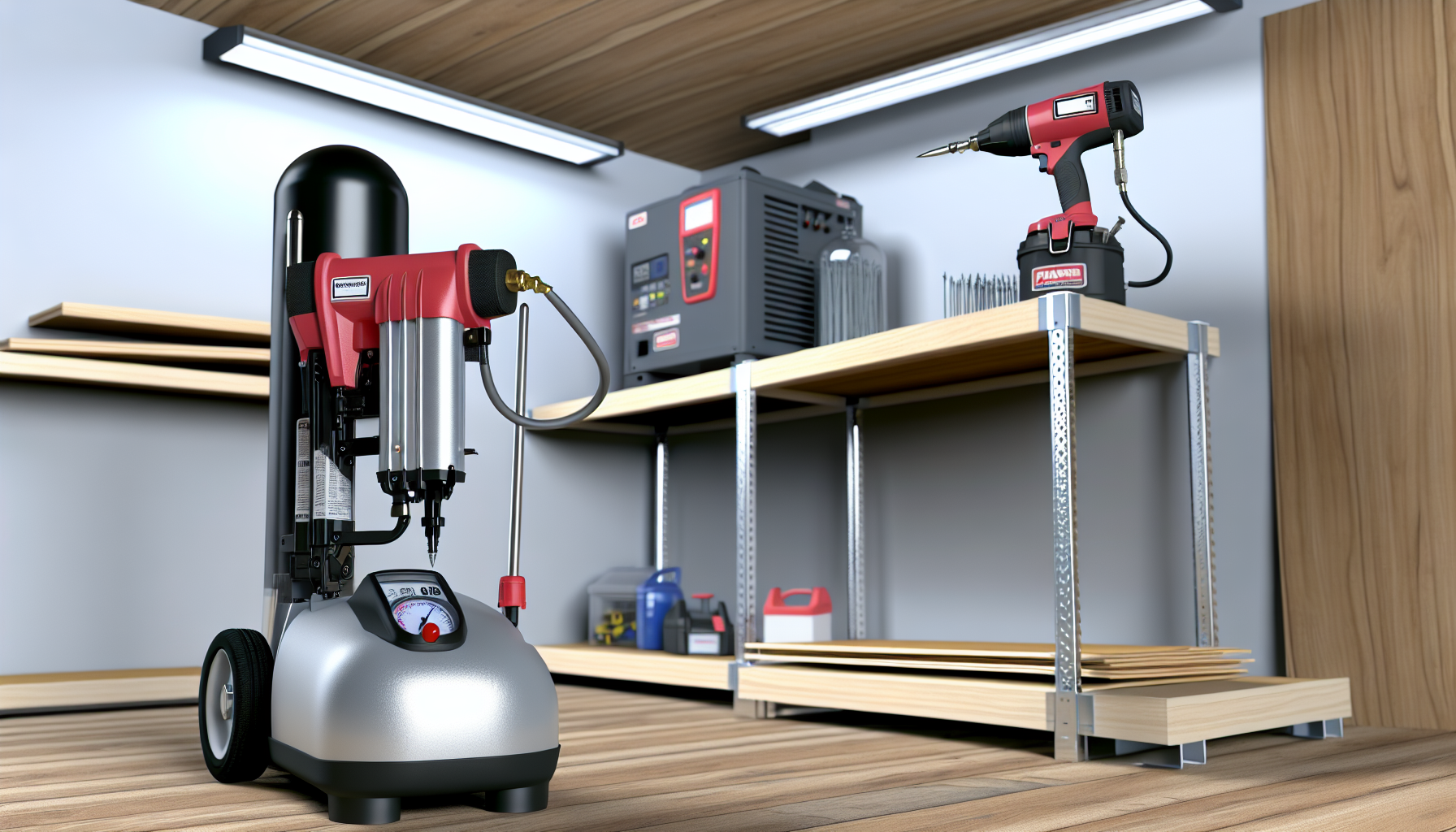
Nailers and Tackers
Connect nailer to air compressor with proper pressure (check tool specs)
Affiliate Links: Some product links may earn us a commission at no extra cost to you.
Tools Needed
- pneumatic nailer
- air compressor
- air hose
- safety glasses
Parts & Materials
Available from multiple retailers
Available from multiple retailers
Available from multiple retailers
Available from multiple retailers
⚠️ Safety First
🔧 Tools Needed
📦 Materials
📋 Step-by-Step Instructions
1. Connect nailer to air compressor with proper pressure (check tool specs)
2. Load appropriate nails or brads for your project and material thickness
3. Test fire on scrap material to adjust depth and pressure
4. Place nailer firmly against work surface before firing
5. Fire with smooth, deliberate action - don't bounce or angle
6. Keep fingers away from nail path and potential ricochet zones
7. Clear jams by disconnecting air and following manufacturer's procedure
8. Store nailer with air disconnected and trigger locked if available
💡 Pro Tips
❌ Common Mistakes to Avoid
🔍 Troubleshooting
Nails don't penetrate fully
*Cause:* Low air pressure or wrong nail size
*Fix:* Increase pressure, check nail specs, verify compressor capacity
Nails blow through material
*Cause:* Too much pressure or wrong nail length
*Fix:* Reduce pressure, use shorter nails, check material thickness
Tool jams frequently
*Cause:* Wrong nails, dirty tool, or worn parts
*Fix:* Use correct fasteners, clean tool, replace worn O-rings
❓ Frequently Asked Questions
Q: What size compressor do I need
A: Minimum 2-gallon tank, 2+ CFM at 90 PSI for most finish nailers
Q: Brad nailer vs finish nailer
A: Brad nailer for thin trim (18-gauge), finish nailer for heavier work (15-16 gauge)
✅ Checklist
Related Guides
Ladders and Access Equipment
Choose appropriate ladder type - step ladder for self-support, extension for leaning
Read Guide →Work Clothing and Safety Gear
Assess job hazards - chemicals, cuts, impacts, electrical, falls
Read Guide →