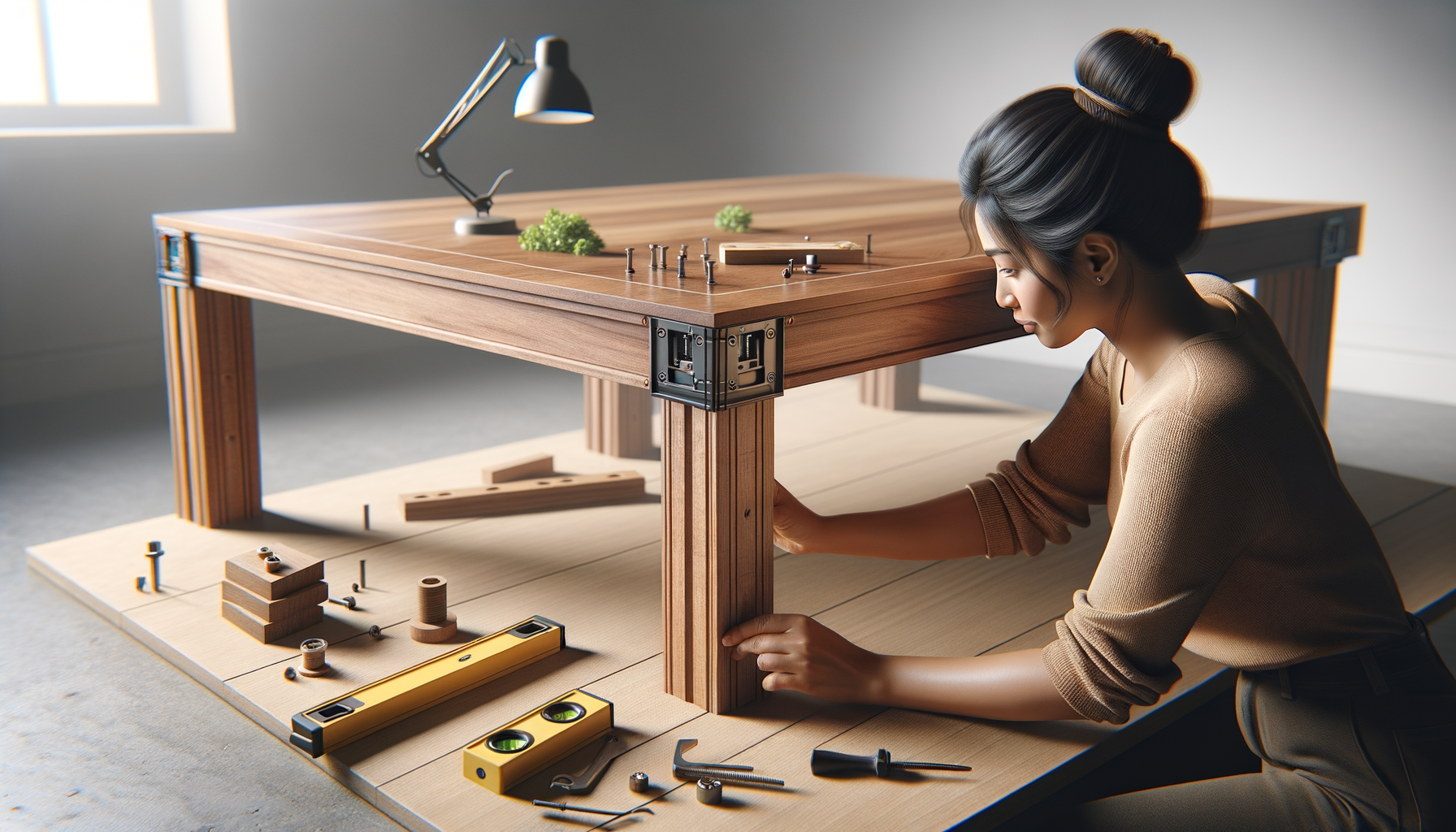
Fixing a Wobbly Table
Turn the table upside down on a soft surface to protect the top
Affiliate Links: Some product links may earn us a commission at no extra cost to you.
Tools Needed
- screwdriver
- wood glue
- clamps
- drill
- wood screws
- sandpaper
- wood filler
Parts & Materials
Available from multiple retailers
Available from multiple retailers
Available from multiple retailers
Available from multiple retailers
Available from multiple retailers
⚠️ Safety First
🔧 Tools Needed
📦 Materials
📋 Step-by-Step Instructions
1. Turn the table upside down on a soft surface to protect the top
2. Check all leg joints and connections for looseness
3. Remove loose screws and clean out old glue from joints
4. Apply wood glue to loose joints and reassemble
5. Use clamps to hold joints tight while glue dries (24 hours)
6. Drill pilot holes and insert longer screws for reinforcement
7. Check for uneven legs by placing table right-side up
8. Sand down high spots or add shims under short legs
9. Fill any gaps or holes with wood filler, let dry
10. Sand smooth and apply matching stain or finish
💡 Pro Tips
❌ Common Mistakes to Avoid
🔍 Troubleshooting
Table still wobbles after repair
*Cause:* Uneven legs or floor
*Fix:* Check floor level, adjust leg heights with shims
Joints come loose quickly
*Cause:* Insufficient glue cure time
*Fix:* Reclamp for full 24-hour cure, use stronger wood screws
Visible gaps in joints
*Cause:* Wood shrinkage or wear
*Fix:* Fill with color-matched wood filler, sand smooth
❓ Frequently Asked Questions
Q: Can I fix antique furniture the same way
A: Use reversible methods first - avoid permanent alterations that reduce value
Q: What if the leg is cracked
A: Small cracks can be glued and clamped, large cracks may need professional repair
✅ Checklist
Related Guides
Repairing Scratches on Wood Furniture
Clean the scratched area with mild soap and water, dry completely
Read Guide →Fixing Squeaky Chair Joints
Identify the source of squeaking by sitting and moving in chair
Read Guide →