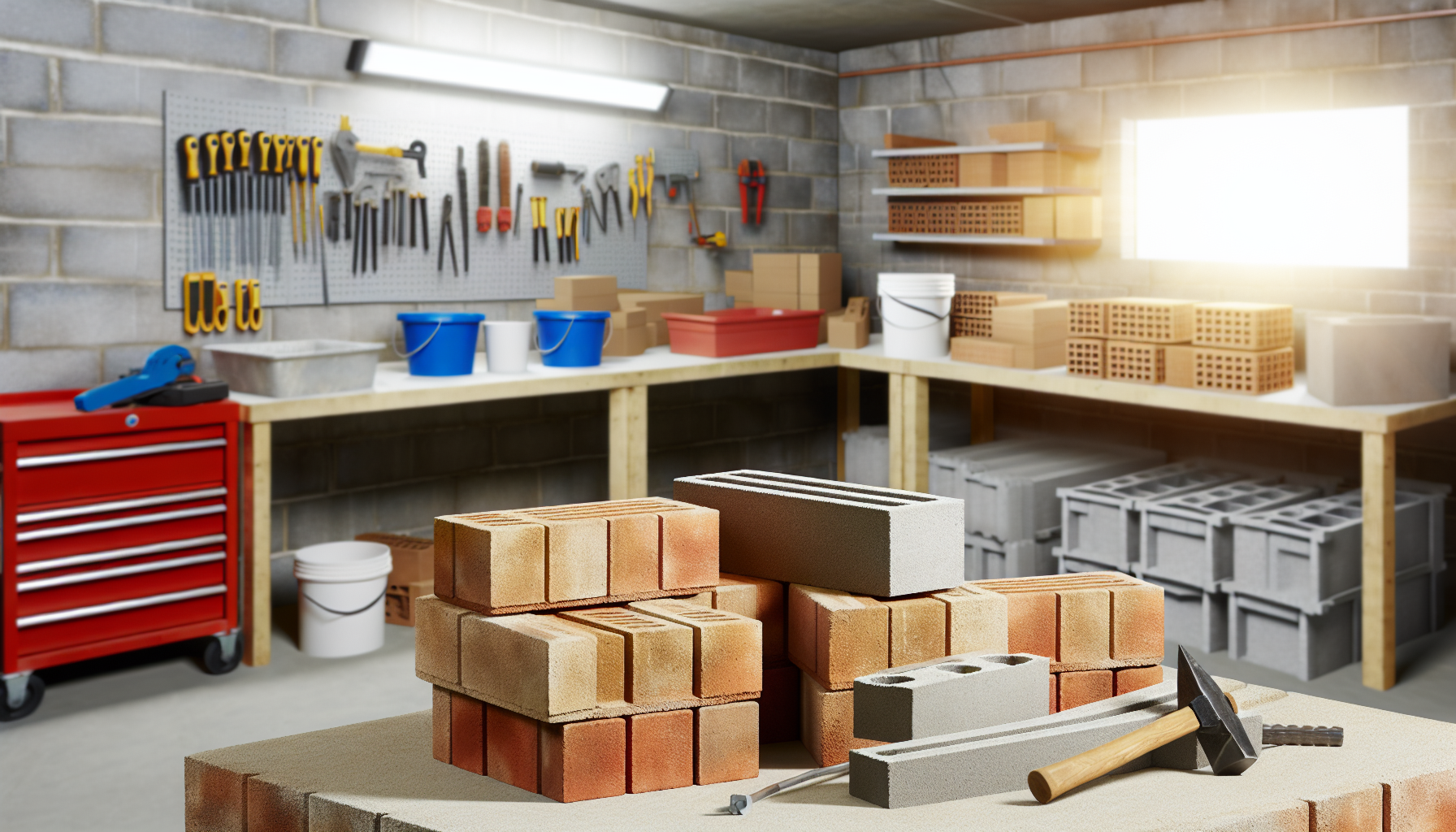
Bricks, Blocks, and Wall Ties
Choose appropriate masonry unit - bricks for appearance, blocks for structure
Affiliate Links: Some product links may earn us a commission at no extra cost to you.
Tools Needed
- trowel
- level
- line blocks
- brick hammer
- jointer
Parts & Materials
Available from multiple retailers
Available from multiple retailers
Available from multiple retailers
Available from multiple retailers
Available from multiple retailers
⚠️ Safety First
🔧 Tools Needed
📦 Materials
📋 Step-by-Step Instructions
1. Choose appropriate masonry unit - bricks for appearance, blocks for structure
2. Plan layout to minimize cutting and ensure proper bond pattern
3. Set up level foundation or footing for wall
4. Mix mortar to proper consistency for weather conditions
5. Lay first course carefully - it determines the entire wall
6. Use line blocks and string for straight, level courses
7. Install wall ties at specified intervals for structural walls
8. Tool joints consistently when mortar reaches thumbprint hardness
9. Keep courses plumb and level throughout construction
💡 Pro Tips
❌ Common Mistakes to Avoid
🔍 Troubleshooting
Mortar joints crack
*Cause:* Settlement, thermal movement, or poor mortar
*Fix:* Address foundation issues, use proper expansion joints, repoint with quality mortar
Wall bows or bulges
*Cause:* Inadequate bracing, poor workmanship, or structural issues
*Fix:* Install proper bracing, rebuild if severely out of plumb, add structural support
Efflorescence on masonry
*Cause:* Water penetration and mineral deposits
*Fix:* Improve drainage, seal masonry, use low-alkali mortars
❓ Frequently Asked Questions
Q: What's the difference between concrete block and brick
A: Concrete block is structural and economical, brick is primarily decorative with some structural capability
Q: How far apart should wall ties be placed
A: Typically every 16-24 inches horizontally and every 6-8 courses vertically
✅ Checklist
Related Guides
Ladders and Access Equipment
Choose appropriate ladder type - step ladder for self-support, extension for leaning
Read Guide →Work Clothing and Safety Gear
Assess job hazards - chemicals, cuts, impacts, electrical, falls
Read Guide →