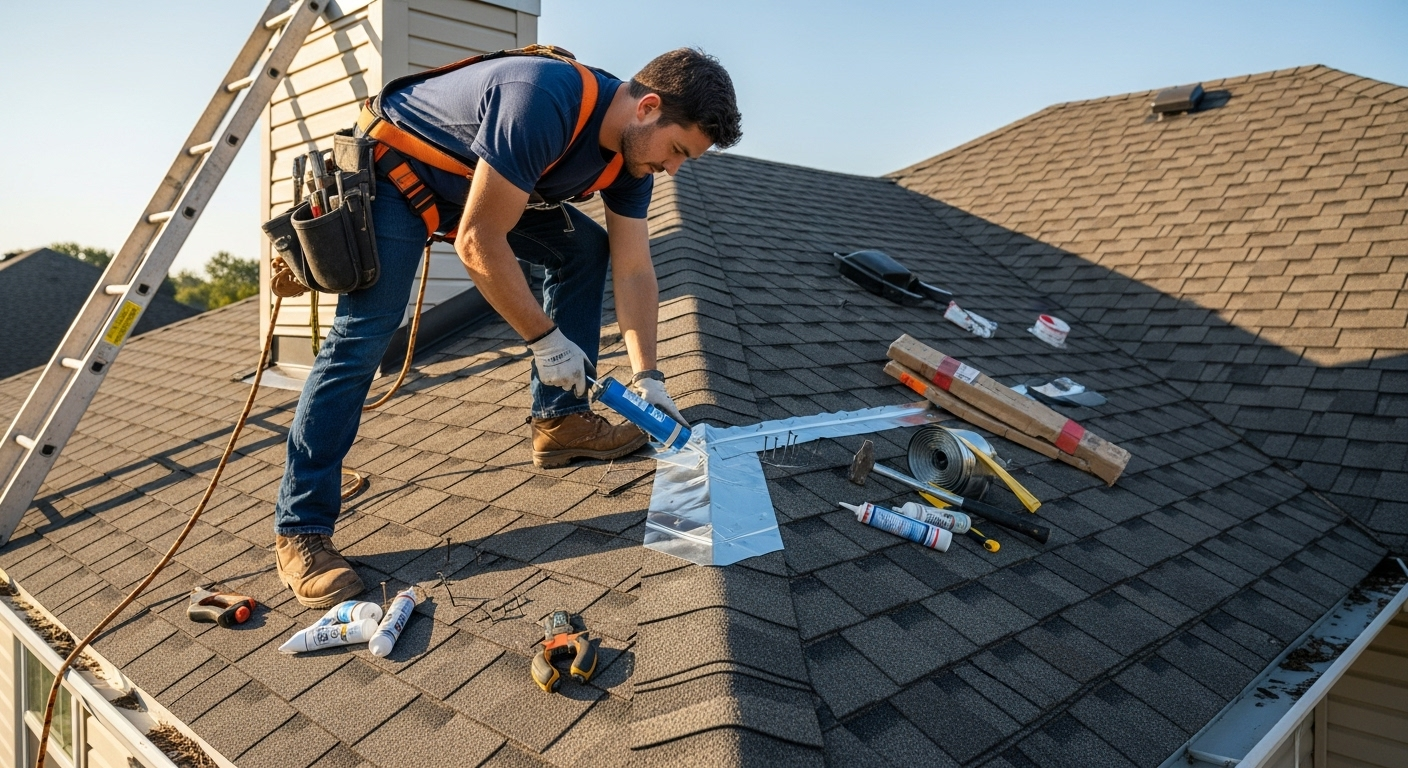
Roof Flashing Repair and Replacement
Identify flashing problem areas by tracing water damage
Affiliate Links: Some product links may earn us a commission at no extra cost to you.
Tools Needed
- pry bar
- roofing cement
- utility knife
- tin snips
- caulk gun
Parts & Materials
Available from multiple retailers
Available from multiple retailers
Available from multiple retailers
Available from multiple retailers
Available from multiple retailers
⚠️ Safety First
🔧 Tools Needed
📦 Materials
📋 Step-by-Step Instructions
1. Identify flashing problem areas by tracing water damage
2. Remove damaged or loose flashing carefully
3. Clean area thoroughly removing old sealant and debris
4. Cut new flashing to proper size if replacement needed
5. Install new flashing starting from bottom and working up
6. Secure flashing with appropriate fasteners
7. Apply roofing cement under and over flashing edges
8. Seal all joints and penetrations with quality sealant
9. Check surrounding shingles for proper overlap
10. Test repair with hose to ensure no leaks
💡 Pro Tips
❌ Common Mistakes to Avoid
🔍 Troubleshooting
Persistent leaks after flashing repair
*Cause:* Water entering from different location
*Fix:* Trace water path more carefully and check all potential entry points
Flashing corroding quickly
*Cause:* Incompatible metals or poor quality material
*Fix:* Replace with compatible, quality flashing material
Sealant cracking or peeling
*Cause:* Poor surface prep or wrong sealant type
*Fix:* Clean thoroughly and use appropriate roofing sealant
❓ Frequently Asked Questions
Q: What type of flashing lasts longest
A: Aluminum and copper are most durable, galvanized steel is economical
Q: How often should flashing be inspected
A: Annually, especially after severe weather events
✅ Checklist
Related Guides
Asphalt Shingle Repair and Replacement
Inspect roof from ground level to identify damaged shingles
Read Guide →Roof Ventilation Installation and Repair
Calculate proper ventilation needs for attic square footage
Read Guide →