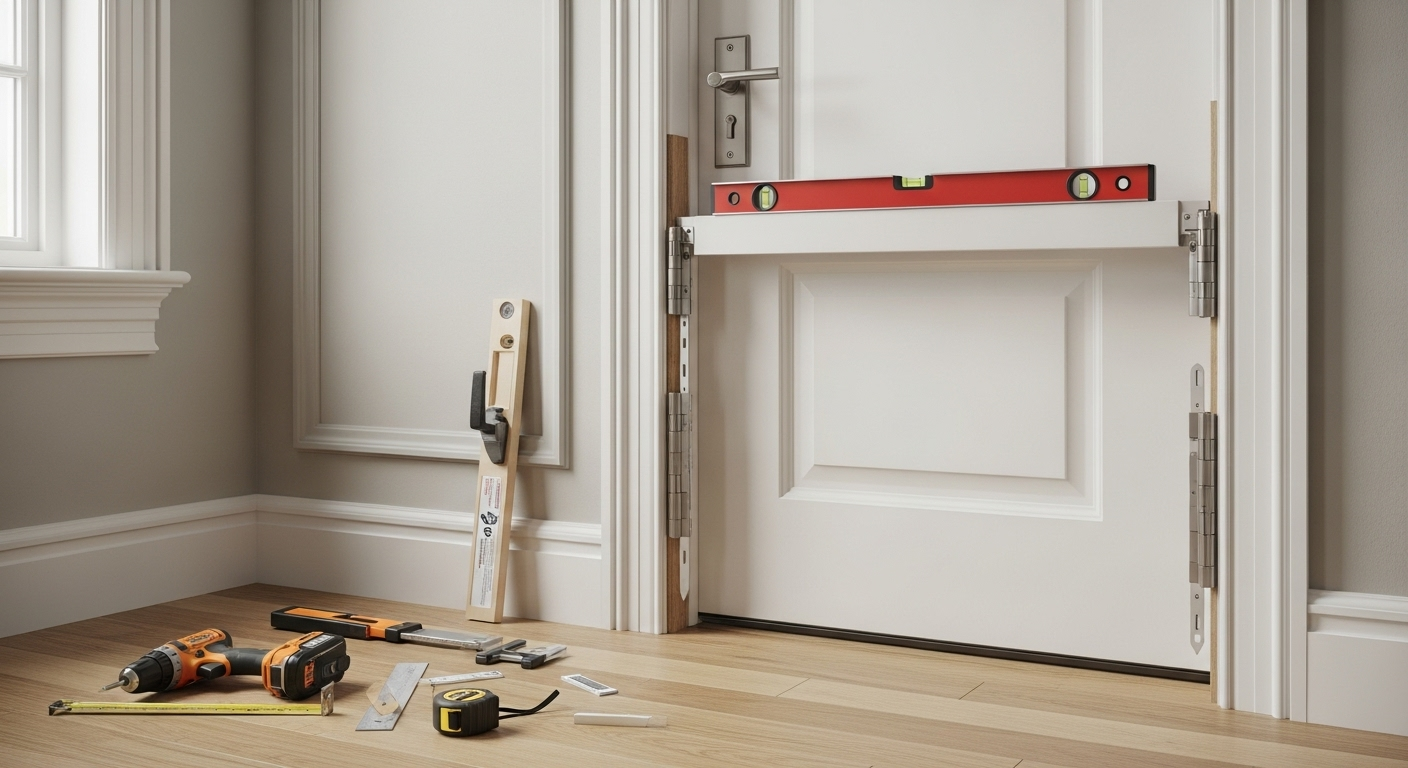
Installing Interior Prehung Doors
Measure rough opening to ensure proper door size
Affiliate Links: Some product links may earn us a commission at no extra cost to you.
Tools Needed
- level
- drill
- screwdriver
- measuring tape
- shims
- utility knife
Parts & Materials
Available from multiple retailers
Available from multiple retailers
Available from multiple retailers
Available from multiple retailers
Available from multiple retailers
Available from multiple retailers
⚠️ Safety First
🔧 Tools Needed
📦 Materials
📋 Step-by-Step Instructions
1. Measure rough opening to ensure proper door size
2. Remove old door and frame if replacing existing
3. Check rough opening for level, plumb, and square
4. Place prehung door in opening with frame flush to wall
5. Shim behind hinges to make frame plumb and level
6. Secure hinge side of frame with 3-inch screws through shims
7. Adjust strike side spacing for even gaps around door
8. Shim and secure strike side of frame
9. Test door operation and adjust if needed
10. Install door casing around frame perimeter
11. Caulk any gaps between frame and wall
💡 Pro Tips
❌ Common Mistakes to Avoid
🔍 Troubleshooting
Door won't close properly
*Cause:* Frame not plumb or hinges binding
*Fix:* Adjust shims and check hinge alignment
Gaps uneven around door
*Cause:* Frame not properly positioned
*Fix:* Re-shim frame for consistent gaps
Door sticks when opening
*Cause:* Frame sagging or door hitting floor
*Fix:* Check frame support and trim door if needed
❓ Frequently Asked Questions
Q: Do I need to remove old door frame
A: For prehung doors, yes - the new frame is part of the unit
Q: How big should gaps be around door
A: 1/8 inch gap on sides and top, 1/4 to 1/2 inch at bottom
✅ Checklist
Related Guides
Installing a Dead Bolt and Lockset
Mark the lock height (36 inches from floor is standard) and center on door edge
Read Guide →Installing Door Casing and Trim
Measure and mark reveal line 1/4 inch from door frame edge
Read Guide →