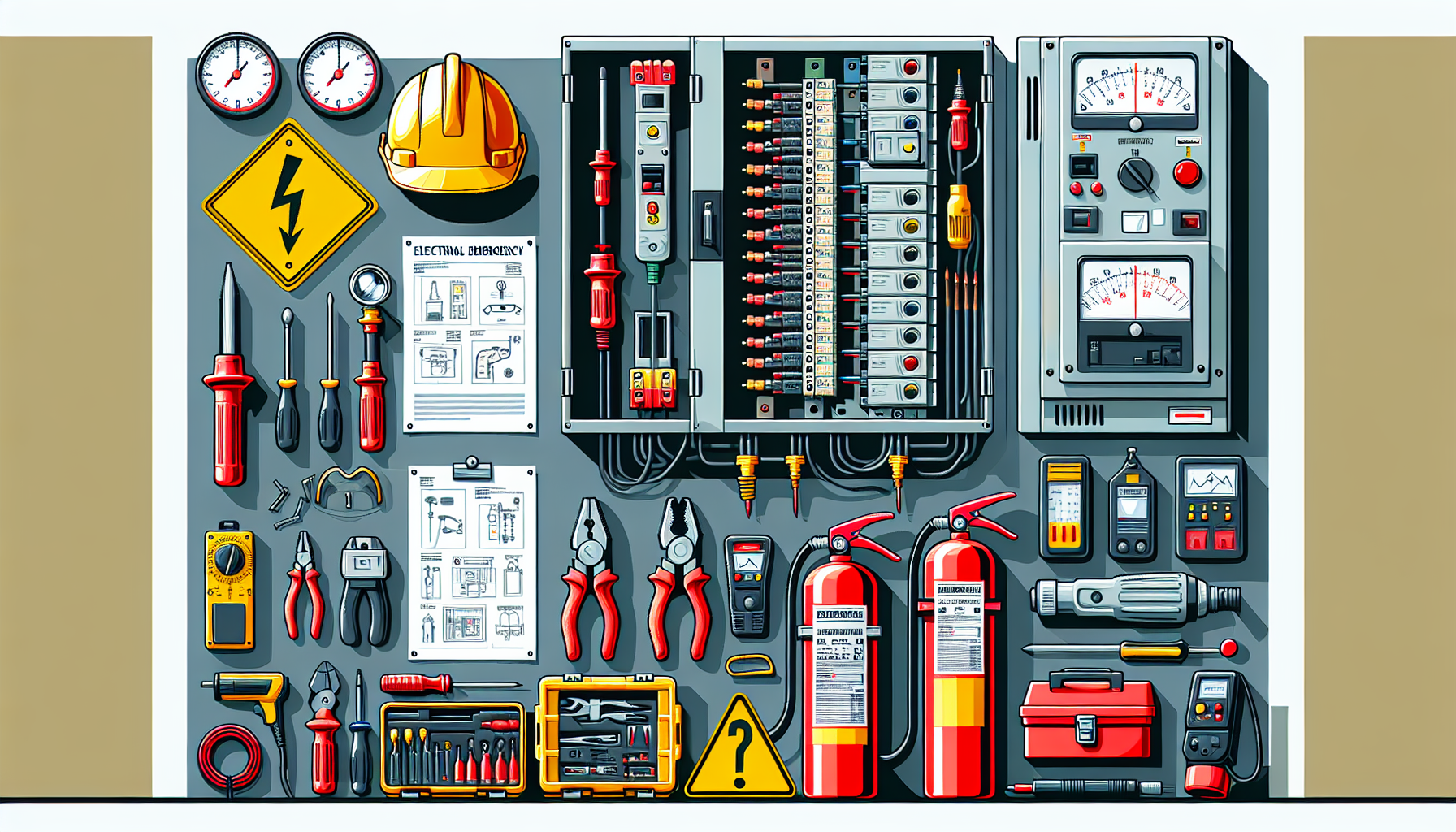
Electrical emergency and safety response repair guide
AI-generated image

Electrical Emergency and Safety Response

Turn off main electrical breaker immediately if emergency

Emergency Repairs
Intermediate
150 minutes
2/2/2026

Affiliate Links: Some product links may earn us a commission at no extra cost to you.

Tools Needed

  • voltage tester
  • insulated tools
  • flashlight
  • fire extinguisher
  • multimeter

Parts & Materials

Available from multiple retailers

AmazonUnavailable
Home DepotMore buying options coming soon
Lowe'sMore buying options coming soon

Available from multiple retailers

AmazonUnavailable
Home DepotMore buying options coming soon
Lowe'sMore buying options coming soon

Available from multiple retailers

AmazonUnavailable
Home DepotMore buying options coming soon
Lowe'sMore buying options coming soon

Available from multiple retailers

AmazonUnavailable
Home DepotMore buying options coming soon
Lowe'sMore buying options coming soon

āš ļø Safety First

  • Turn off power at main breaker before any electrical work
  • Never touch electrical equipment with wet hands
  • Use only Class C fire extinguisher on electrical fires

  • šŸ”§ Tools Needed

  • voltage tester
  • insulated tools
  • flashlight
  • fire extinguisher
  • multimeter

  • šŸ“¦ Materials

  • electrical tape
  • wire nuts
  • replacement breakers
  • emergency lighting

  • šŸ“‹ Step-by-Step Instructions

    1. Turn off main electrical breaker immediately if emergency


    2. Identify specific circuit causing problem if safe to do so


    3. Check for visible damage, burning smell, or sparks


    4. Test outlets and switches with voltage tester


    5. Reset tripped breakers only if cause is identified


    6. Replace blown fuses with same amperage rating


    7. Check GFCI outlets and reset if needed


    8. Inspect electrical cords for damage


    9. Use flashlights instead of candles for lighting


    10. Call electrician for any wire or panel damage


    11. Document damage for insurance if storm-related


    šŸ’” Pro Tips

  • Label all circuit breakers for quick identification
  • Keep flashlights and battery-powered radio accessible
  • Install whole-house surge protector for protection

  • āŒ Common Mistakes to Avoid

  • Resetting breakers without finding cause of trip
  • Using water on electrical fires
  • Working on electrical systems without turning off power

  • šŸ” Troubleshooting

    Breaker keeps tripping

    *Cause:* Overloaded circuit or short circuit

    *Fix:* Reduce load on circuit and check for damaged wiring


    No power to outlet

    *Cause:* Tripped breaker, blown fuse, or GFCI trip

    *Fix:* Check panel and reset breakers, test GFCI outlets


    Lights flickering

    *Cause:* Loose connections or overloaded circuit

    *Fix:* Check connections and redistribute electrical load


    ā“ Frequently Asked Questions

    Q: When should I call an electrician

    A: For any wire damage, panel issues, or problems you can't safely resolve


    Q: Can I replace my own circuit breaker

    A: Only if you're experienced - panel work can be dangerous


    āœ… Checklist

    ☐Turn off main breaker
    ☐Identify problem circuit
    ☐Check for visible damage
    ☐Test with voltage tester
    ☐Reset breakers safely
    ☐Replace blown fuses
    ☐Check GFCI outlets
    ☐Inspect cords
    ☐Use safe lighting
    ☐Call electrician if needed

    Related Guides

    Burst Pipe Emergency Repair

    Locate and turn off main water shutoff valve immediately

    Read Guide →

    Power Outage and Backup Power Setup

    Check circuit breakers and electrical panel for issues

    Read Guide →

    Gas Leak Emergency Response

    Do not use electrical switches, phones, or create any sparks

    Read Guide →

    Related Videos