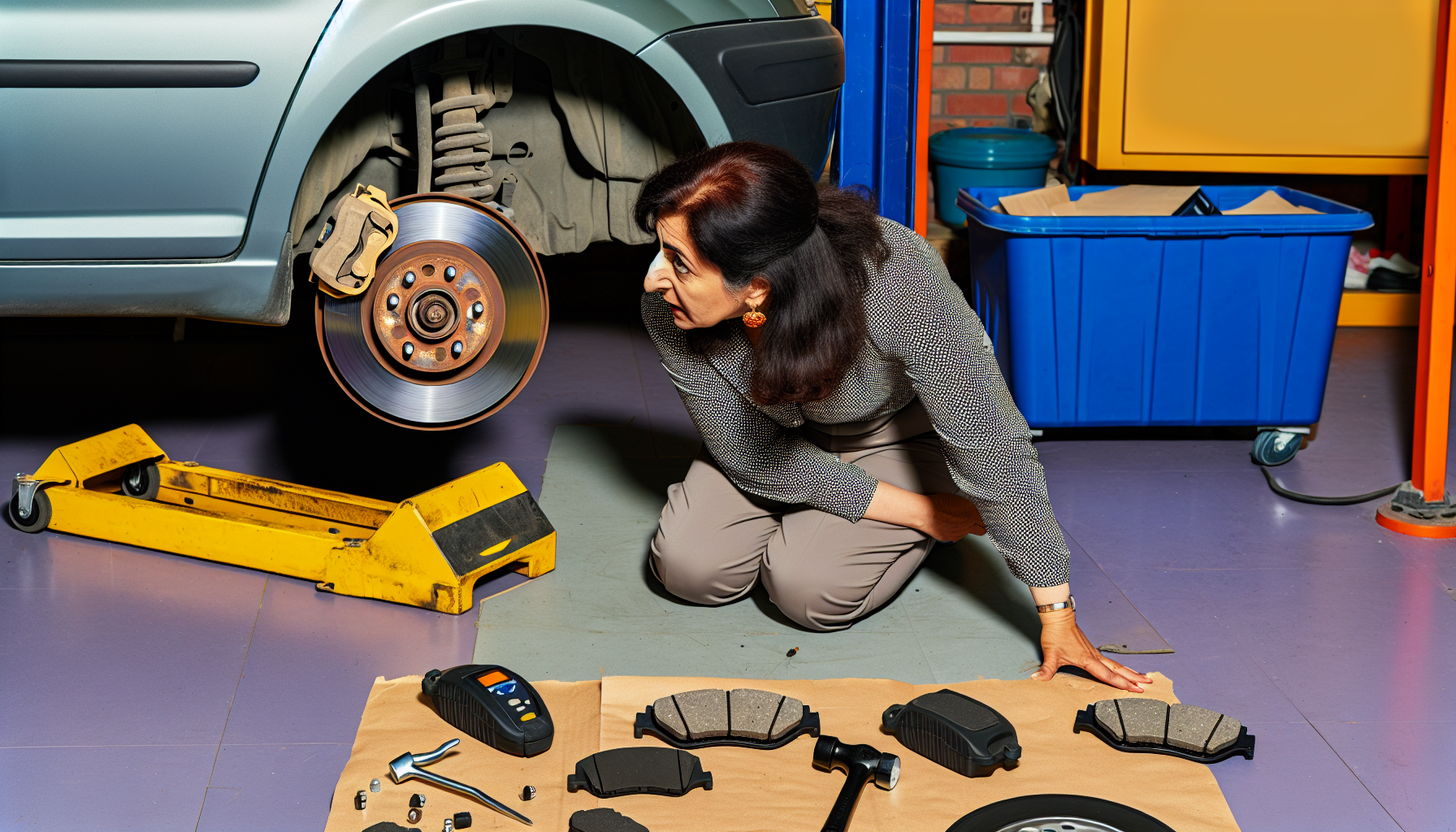
Brake Pad Inspection and Replacement
Raise vehicle and remove wheels to access brakes
Affiliate Links: Some product links may earn us a commission at no extra cost to you.
Tools Needed
- lug wrench
- C-clamp
- brake tool
- wire brush
- brake cleaner
Parts & Materials
Available from multiple retailers
Available from multiple retailers
Available from multiple retailers
Available from multiple retailers
⚠️ Safety First
🔧 Tools Needed
📦 Materials
📋 Step-by-Step Instructions
1. Raise vehicle and remove wheels to access brakes
2. Inspect brake pads through caliper for thickness
3. Remove caliper bolts and lift caliper off rotor
4. Remove old brake pads from caliper bracket
5. Inspect rotor surface for scoring or damage
6. Clean caliper bracket and apply brake grease to slides
7. Compress caliper piston with C-clamp
8. Install new pads with shims in caliper bracket
9. Reinstall caliper over new pads and tighten bolts
10. Pump brake pedal to seat pads against rotor
11. Test brake operation before driving
💡 Pro Tips
❌ Common Mistakes to Avoid
🔍 Troubleshooting
Squealing noise when braking
*Cause:* Worn brake pads or glazed rotors
*Fix:* Inspect and replace pads, resurface rotors if needed
Spongy brake pedal
*Cause:* Air in brake lines or low brake fluid
*Fix:* Check fluid level and bleed brake system
Vibration when braking
*Cause:* Warped rotors or uneven pad wear
*Fix:* Have rotors resurfaced or replaced
❓ Frequently Asked Questions
Q: How often should brake pads be replaced
A: Typically 25,000-70,000 miles depending on driving habits and pad material
Q: Can I replace just one brake pad
A: No, always replace pads in pairs on the same axle for even braking